The Brooklyn Jugs
From the Brooklyn Bridge to Coney Island, the Brooklyn Jugs played a toe-tapping mix of old-time blues and jug music. The band’s stage names, improvised rhythm instruments, and sense of theatrical play placed it naturally beside Adhesive Theater Project.
The lineup
- Morejon Gonzalez — banjo, harp, vocals
- Perfesser Zeke Leonard — guitar, kazoo, vocals
- Short Stride Clyde Everett Eubanks — washboard, vocals
- Longarm Terrence McCafferty — guitar, mandolin
- Honest Mike Rutherford — washtub bass, slide whistle
- Sidesteppin’ Arturo Stile — jug
Past members included Charles “Lips” Marseilis, Corntanglin’ Kate, A. Bogs, Norris, and Rosebud.
A sound made from useful things
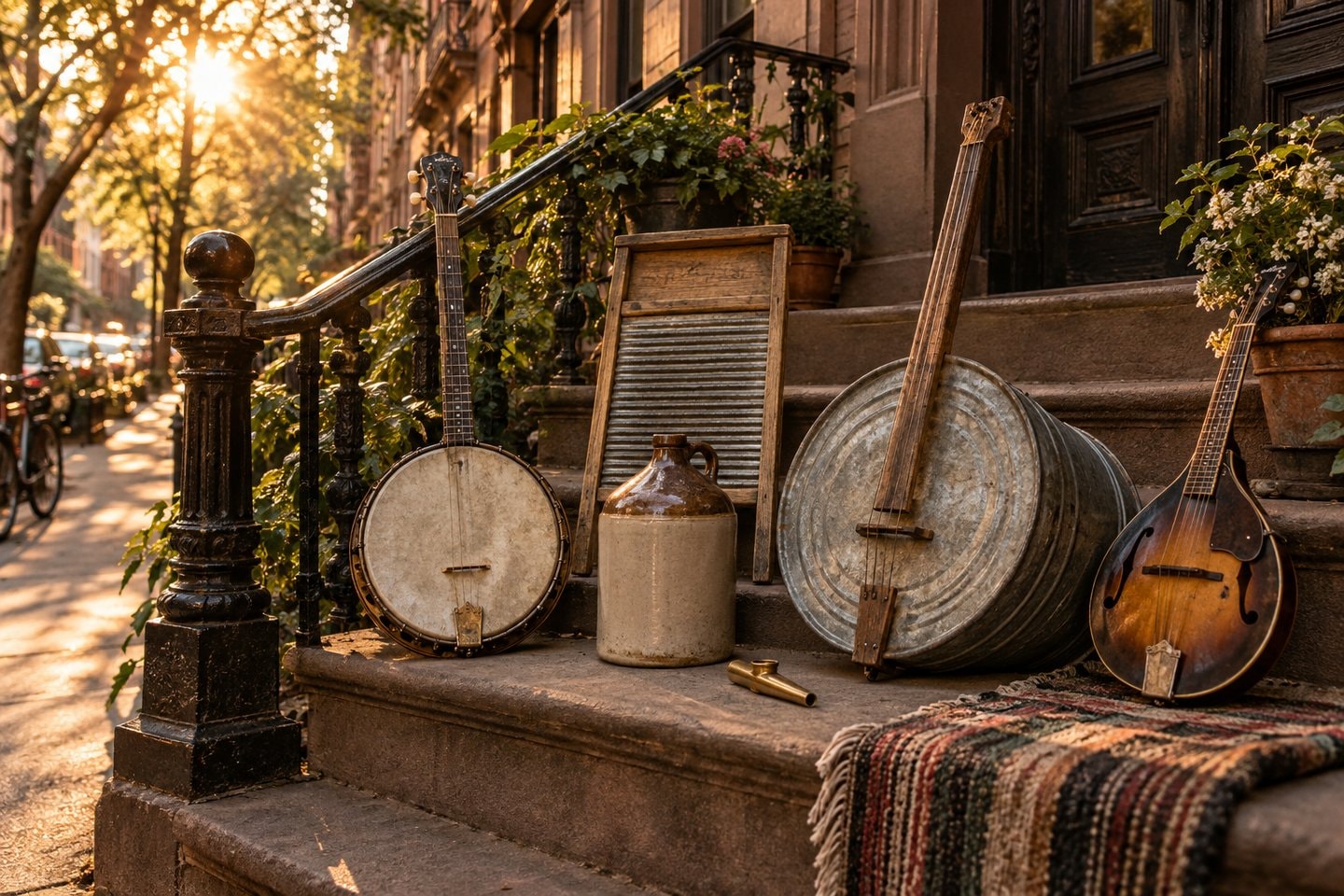
A jug band can place a banjo or guitar beside objects that began outside a formal instrument case. The washboard supplies a scraped rhythm. A washtub bass gives a low pulse. A jug can carry a bass wind tone, while kazoo, harmonica, mandolin, slide whistle, and voices fill out the arrangement. That mixture makes the mechanics of the sound easy to see, much as Adhesive’s stage work often let an audience see how a puppet, frame, or piece of scenery became theatrical.
The Brooklyn Jugs described their territory through the city’s bridges and boardwalks and framed the songs with humor about loving, making rent, and trying to have one more last performance. The presentation was part concert and part character piece. Monikers turned the lineup into a cast, and the instruments turned familiar household materials into a rhythm section.
Reunions and Brooklyn events
After the band’s earlier farewell performances, members reunited at Adhesive Theater Project’s tenth-year event in 2009. They later returned for the seventh annual Brooklyn Country Music Festival in 2010, where they appeared as the festival finale. Guests joined on bass, harmonica, banjo, and mandolin. The page also recorded a radio appearance before the festival, but no station branding is carried here.
Another reunion configuration appeared as the Brotherhood of the Brooklyn Jugs during a herb-garden weekend at Brooklyn Botanic Garden. The record names Morejon, Sidesteppin’ Arturo, Short Stride Clyde, and Longarm McCafferty in that group, with Ernie Vega joining on mandolin. These were discrete past events rather than a continuing performance schedule.
The band made a joke of endings: last, second-to-last, and “one more last” shows accumulated across its long history. The repeated farewell suited a form built around gathering. A jug, washboard, banjo, and voices could be assembled again when the occasion called for it, then packed away without pretending the ending was final.
Jug music in context
The Projects & Events page places the band alongside the company’s productions and public events. The instruments also echo the handmade robot costumes, puppet workshops, and found-object stage mechanisms seen elsewhere in the work. In each case, an ordinary material acquires a role through timing, coordination, and live attention.
Performance character without a script
The monikers shaped the band before a note sounded. “Perfesser,” “Short Stride,” “Longarm,” “Honest,” and “Sidesteppin’” suggest posture, timing, and attitude, while the instrument list completes a quick stage picture. The humor stays attached to the music rather than turning into a separate sketch. A scraped washboard, blown jug, plucked banjo, and foot-tall washtub arrangement each have a visible action, so an audience can read the groove as well as hear it.
That visual clarity connects the Jugs with the theater company. Adhesive often built scenes from mechanisms an audience could grasp at a glance: a flat prop standing by means of a magnet, an illustrator drawing into a projection, an operator giving movement to a puppet, or a cardboard robot costume assembled from familiar materials. The band applied the same pleasure to rhythm. Useful objects did not disappear into polish; they kept their surfaces and acquired a second life through performance.