The Battles of Coxinga
1999 · The Piano Store · Adapted and directed by Cory Einbinder
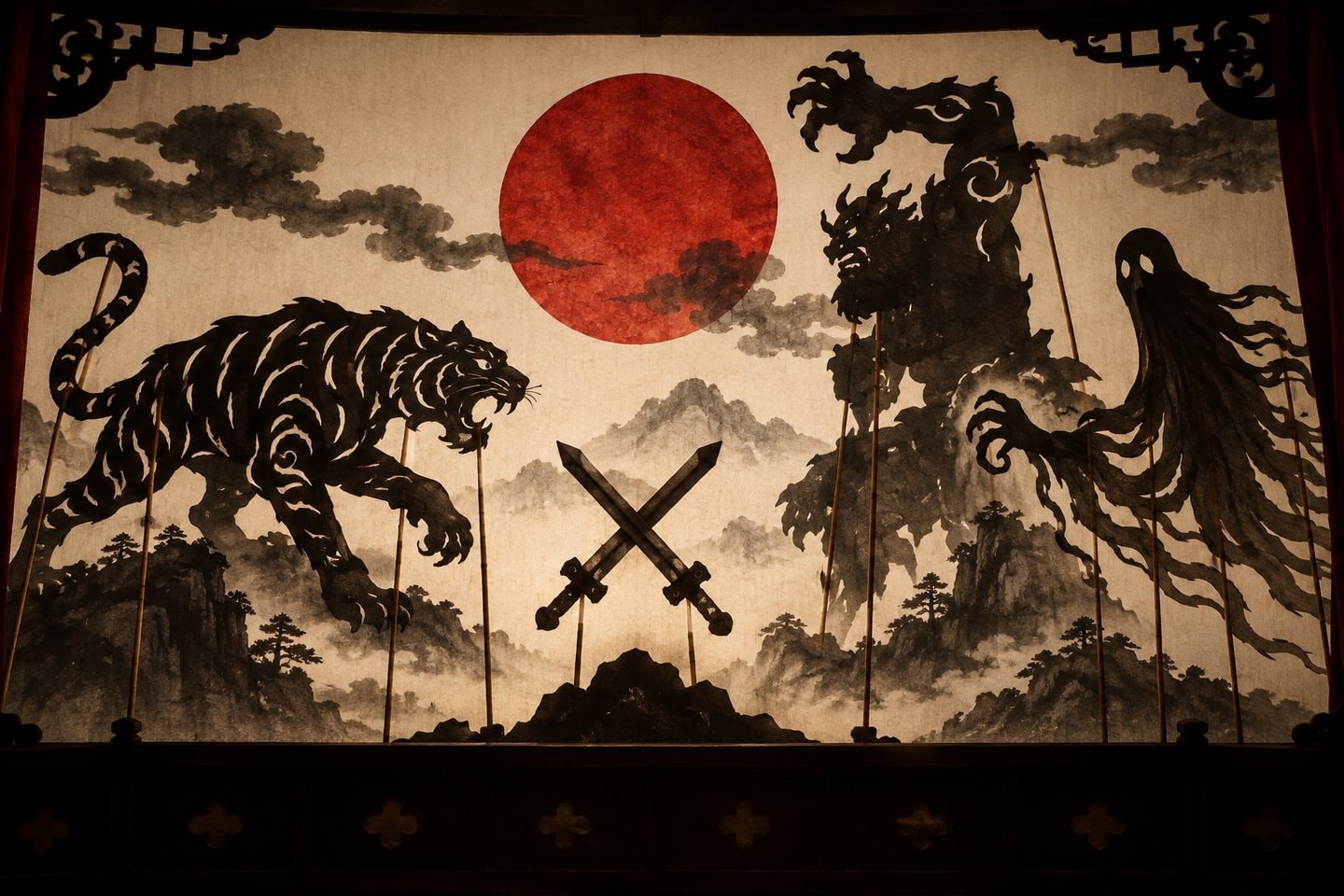
A band of exiles attempts to save country and family through sacrifice, bloodshed, and heroism. Adhesive Theater Project transformed Chikamatsu Monzaemon’s play into an action spectacle of sword fights, shadow puppets, ghosts, giants, and tiger dances.
Source and adaptation
The production used Donald Keene’s translation and an adaptation by Cory Einbinder. The Japan Arts Council’s National Theatre resource on Chikamatsu identifies him as a playwright for both Ningyo-joruri puppet theater and Kabuki, and describes The Battles of Coxinga as a heroic story set in China and Japan that was also adapted for Kabuki.
That background helps explain why Adhesive’s use of shadow puppets and heightened action could engage the theatrical source through form. The company’s description emphasized momentum and stage invention. Sword fights and tiger dances supplied physical scale, while shadows, ghosts, and giants let small constructed means suggest forces much larger than the room.
Creative team
- Chikamatsu Monzaemon — playwright
- Donald Keene — translator
- Cory Einbinder — adapter and director
- Rebecca Brame — art direction
Cast
- Peter Brown
- Forrest Seward
- Eric Giancoli
- Christiaan Koop
- Marc Krinsky
- Kalle Macrides
- Terry Maratos
- Jina Oh
- James Sturtevant
- Debbie Troche
An early statement of scale
The 1999 production was the company’s first. Its methods already anticipate the projects that followed. Kirby used layered sound, movement, and spectacle for an ensemble superhero story. Chantecler expanded puppetry into a large population of animal figures. R.U.R. combined a classic play with music, dance, film, and sculpture.
The production also drew a short press notice:
“Einbinder genuinely succeeds.”
Village Voice
Continue to Projects & Events for the full sequence of productions or visit Review Excerpts for other short attributed lines.