Why live theater?
Give an audience a painted backdrop, ask them to see a forest, and they will do a surprising amount of the work.
The movies next door
Ever since the arrival of film, theater has had a younger sibling with a gift for spectacle. The two forms have borrowed ways of acting, staging and telling stories from one another. A successful play goes to the movies. A film makes the leap to Broadway. We became interested in what happened to a stage when it tried to look quite as real as a moving picture.
In our founding argument we understood realism as a response to an earlier set of conventions. Romantic drama and melodrama had acquired habits their audiences could see coming. Closer observation of ordinary life gave the stage a way to move again. In its turn, realism became a convention with demands of its own.
The audience makes the leap
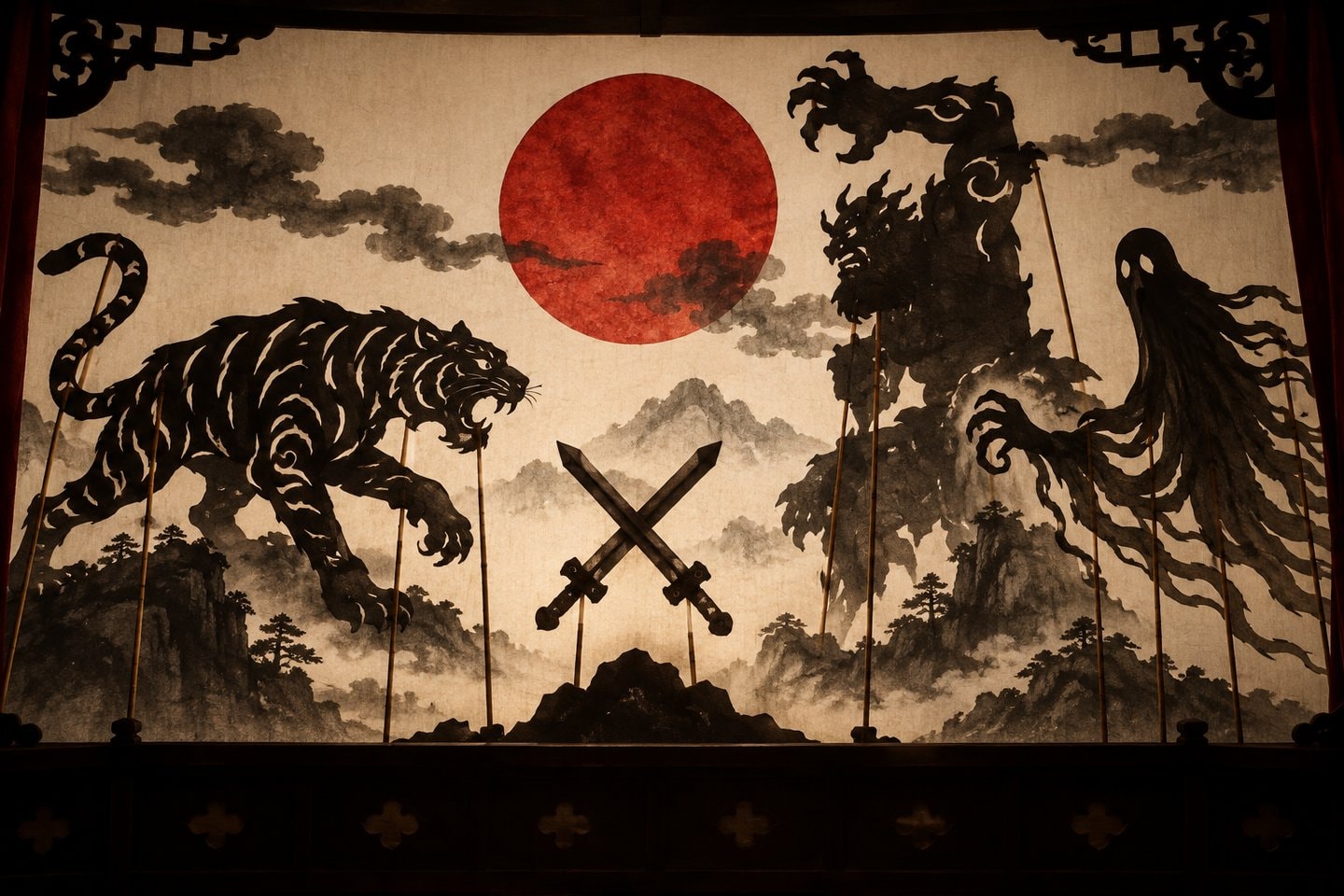
A stage starts as an empty surface. People carry in scenery, costumes and a few devices. Then the audience agrees that the strip of paint at the back is a forest. An actor can become an animal. A person can fly. A theater that spends all its energy disguising the arrangement can miss the particular pleasure of making that agreement in public.
Our interest lay in metaphor, and in the fine distinctions an audience can make with very little prompting. The spectator can see the operator of a puppet and still follow the puppet’s thought. The same spectators can recognize the material for what it is and be moved by what it becomes.
“The theater is an incomplete art form”
What the audience brings back
We wanted people to make a leap of faith in the room and carry a little of it back into everyday life. A backdrop becomes a forest in part because everybody brings a forest of their own. An illustrator, a dancer, a musician and a scientist each bring a different one. That was a good reason to build a company around collaboration.