AdhesiveTheater Project Brooklyn, New YorkMenu

Company letters

Dear friends,

A day before the Robot Parade, we wrote to everyone with a change of plan. Even a tin robot needs somewhere dry to stand. Company letters from 2005 to 2013 follow the work from the barnyard to Prospect Park.

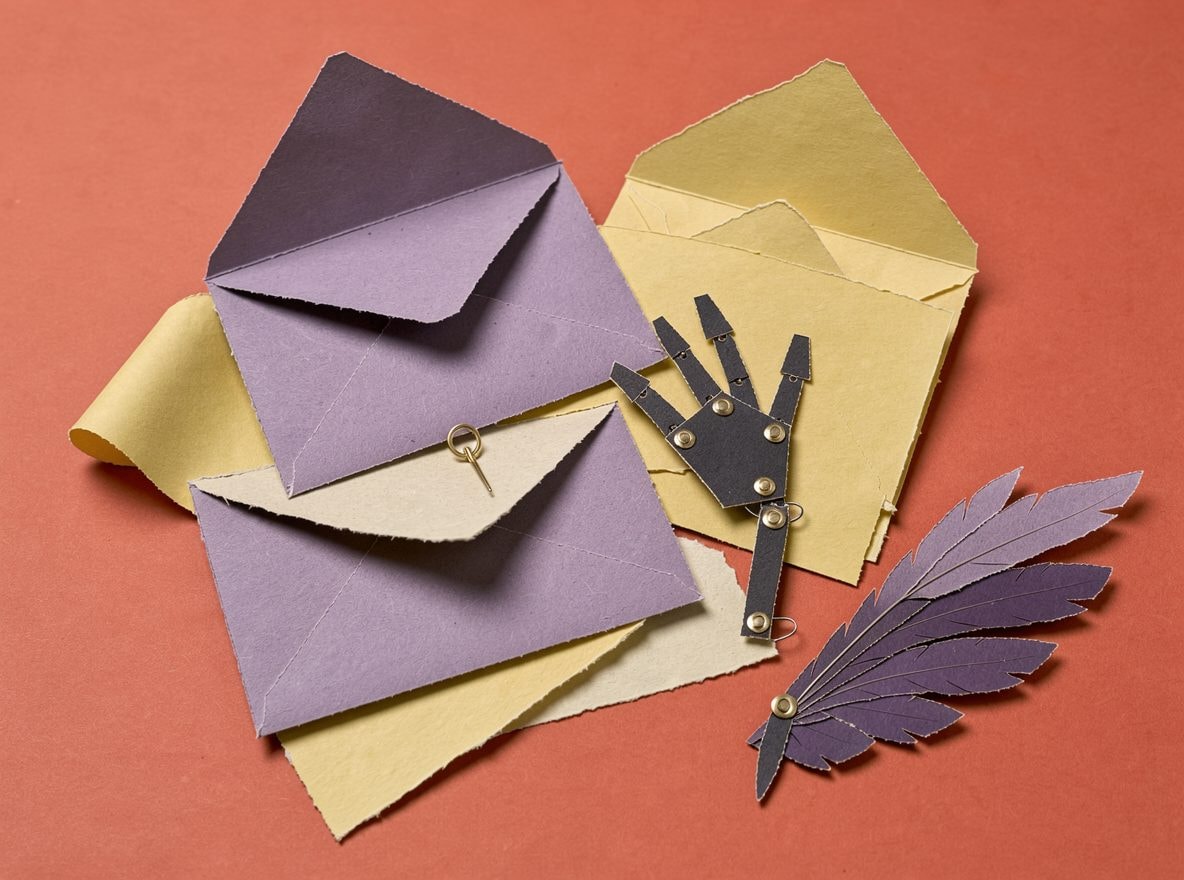
Open lilac envelopes, blank folded sheets and a few small puppet parts.
Paper study of the mailings, with a puppet hand and a feather among the envelopes.

A farmyard in the making

The spring letter introduced the makers of Chantecler. Diana Whitten took charge of the art direction. Christiaan Koop and Talaura Harms worked on the puppets, Brian Matthews built wings, and Jeff Stark worked on projection. Jonathan Zeh and James Harley took turns drawing during the performance. The audience could watch the drawing and see it appear on the set.

For two workshops, the cast and crew gave children materials like those used to make the show’s masks and puppets. A stoop sale gave neighbors a different hand in the work. Something taking up space in a Brooklyn apartment could help put a bird on stage.
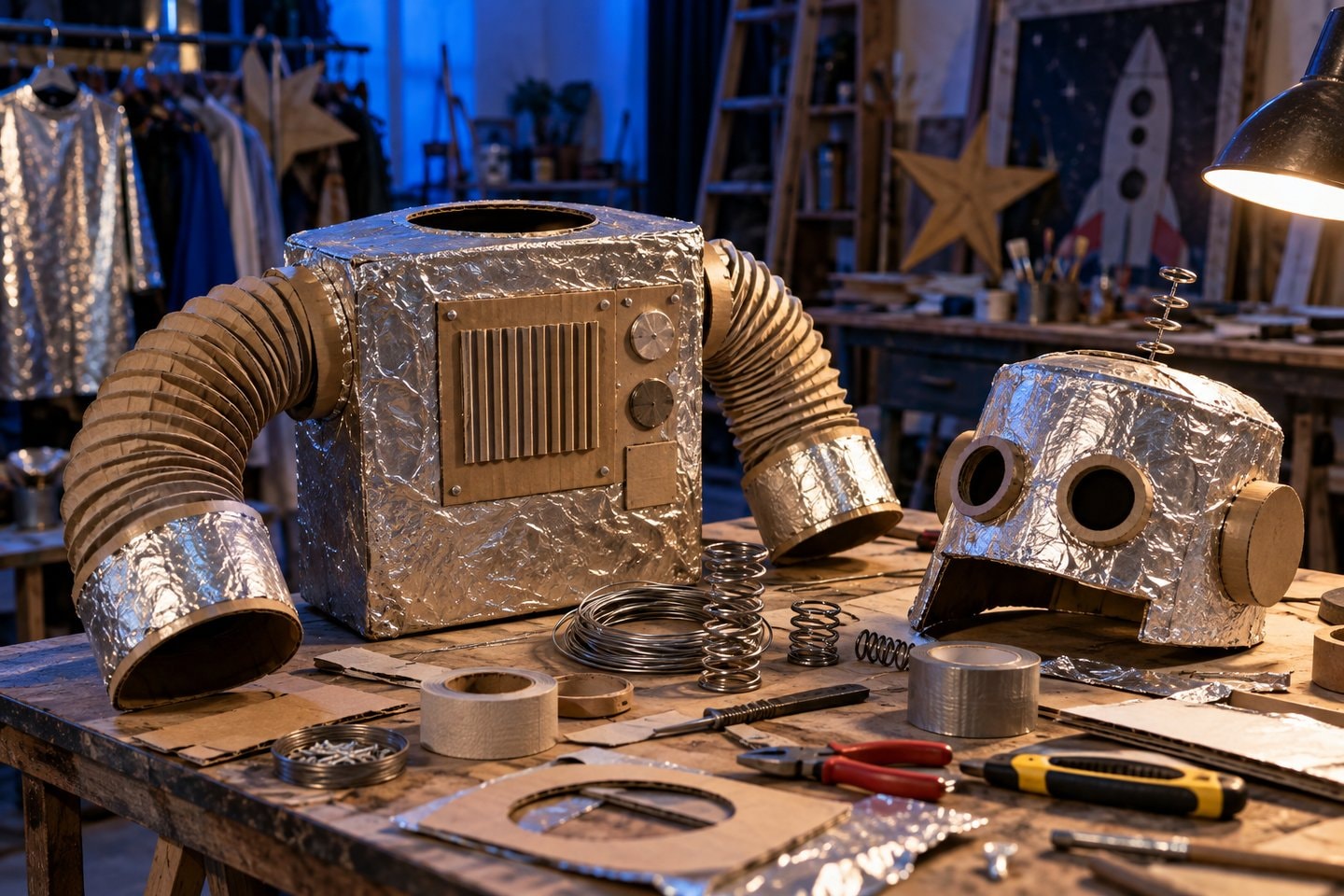

An articulated paper robot balances beside the antenna of a model theremin.
Paper study of a robot in the folk opera.

A rain plan for robots

In March we could finally put a name to our first grant. New York City’s Department of Cultural Affairs supplied the funds, and the Brooklyn Arts Council awarded them through its Community Arts Regrant Program. The same letter reported on our first weeklong artists’ retreat. Five actors joined the creative team at a Virginia farmhouse to work on R.U.R.

The first parade letter invited anything from an attic toy to a homemade machine. By April 21 we were expecting rain. The next bulletin sent people, robots and tin costumes under the Manhattan Bridge. The photographers came too. When the rain stopped, everyone could march.

Five days after the parade, the R.U.R. workshop opened at Spring Theatreworks in DUMBO. Eight actors took up Čapek’s play in dance and song, with a live band.

Pennies, a stoop sale and a reading

The June mailings brought readers to The Brick for I, Object!, then passed along Megin Jimenez’s review. By August we were asking neighbors to clear their shelves. Their castoffs would help pay for NOIR. Hurricane Hanna pushed the stoop sale from Saturday to Sunday. The Sunday invitation offered lemonade.

In December, Kalle Macrides curated six readings for The Art of Spoken Words. Scott Adkins’s Parable of a Spider opened the series. Matt Korahais’s Fitter, Happier, More Productive played the night before NOIR. At the Voorhees on December 13, a cast of nine read the crime story.

Six nights for one second of film

In March we filled Jalopy with bands and dancers for the company’s tenth birthday. The proceeds helped take NOIR from the reading table to the Voorhees. The April mailing broke the news that our filmmaker had been shot. He had one second, twenty-four frames and six performances in which to solve his own murder.

The December letter followed a different part of the show. The November/December issue of Live Design described the video system that let the actors move a frame without losing the picture projected onto it.

A jug, washboard and banjo made of paper lean together on model stoop steps.
An instrument study for the Jugs, from washboard to banjo.

A band among the herbs

The company wrote after a writing retreat at Emma Field Farm in Virginia. Meanwhile the Brotherhood of the Brooklyn Jugs had been playing in the herb garden at Brooklyn Botanic Garden. A naturalist took listeners on herb walks between sets.

The September band letter brought those garden listeners along for a reunion. The Brooklyn Jugs played on WKCR over Labor Day weekend, then closed the seventh Brooklyn Country Music Festival at Southpaw. Clyde sang Cold. Morejon sang Chicken. The band put the two titles together as “Cold Chicken.”

The boy goes out in public

At World Maker Faire the Big Headed Toddler found himself among butterfly bicycles, a cupcake car and a life-size mousetrap. It gave the crew a chance to test their video puppet in front of people. The October 5 PRELUDE excerpt brought Caroline Tamas and the boy into the play, followed by questions from the audience.

Erin Courtney was writing The Service Road for two old friends. The commission became a Prospect Park story loosely drawn from the labors of Hercules. Then Hurricane Sandy hit. The company arranged a benefit performance for City Tech entertainment technology students affected by the storm.

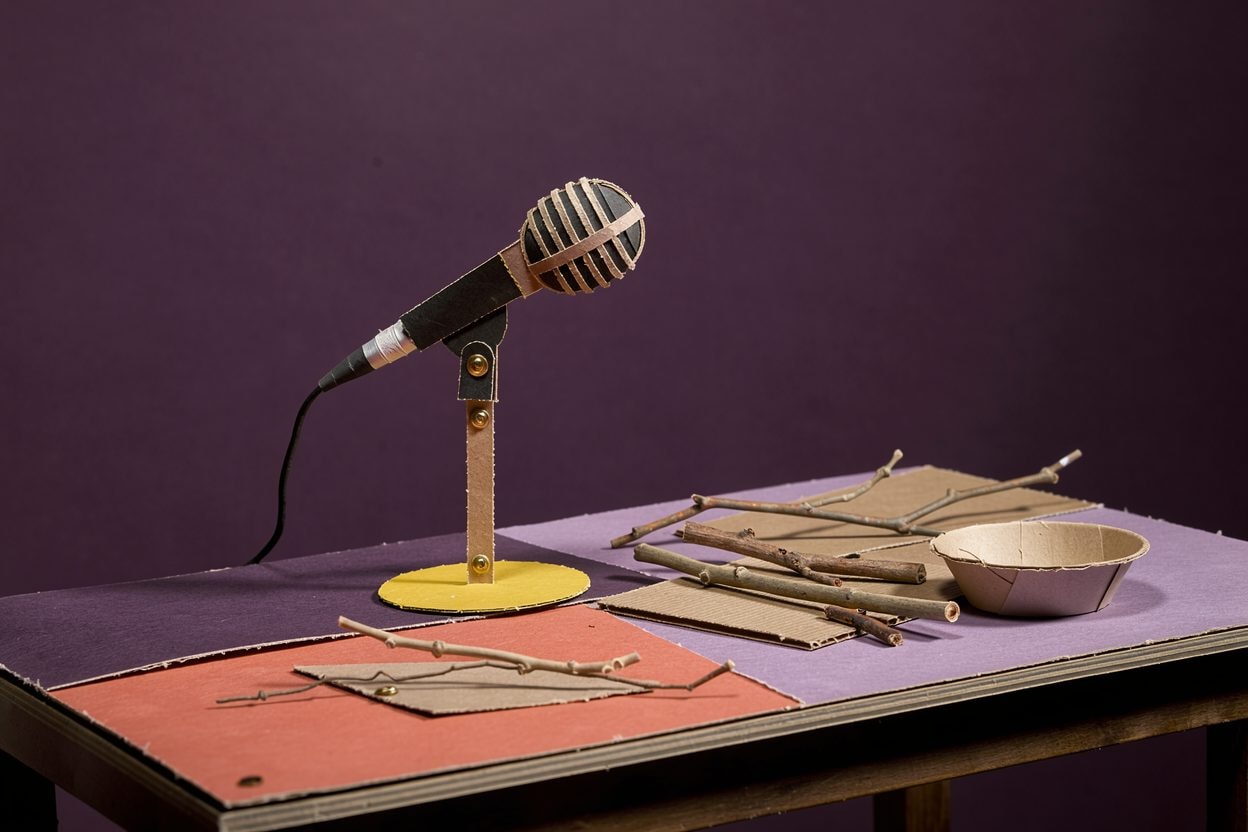
A suspended microphone hangs over twigs, a bowl and a corrugated sheet.
Sound-table study for the storm in Prospect Park.

How the park worked

Courtney had started with a request for a two-actor play. By the time it reached the stage, Cory Einbinder played four men, Kalle Macrides played Lia, and Caroline Tamas and Claire Moodey operated the creatures. Director Meghan Finn had a construction lift, live sound, puppetry and video to bring together.

In the winter letters, the makers talked about sound, puppets and video. Mark Bruckner and Moodey used feathers, rattles and a detuned autoharp alongside loops and surround sound. Moodey also sang, made animation and worked the Ghost Dog like a marionette. Tamas practiced the child’s expressions in a mirror. On stage she had to look where the child was looking while finding her own footing with her peripheral vision.

Andy Buck’s post-show conversations followed the writing, the City Tech residency, the sound and the technology. In the final letter, Erin Grabe explained the carousel. A bicycle, a stool and a patio umbrella made up the ride. A chain and belt turned Linus in his seat as he pedaled, while a lamp cast carousel horses onto the floor. The finishing touch was a copper bell. After the show, the audience got a turn.